

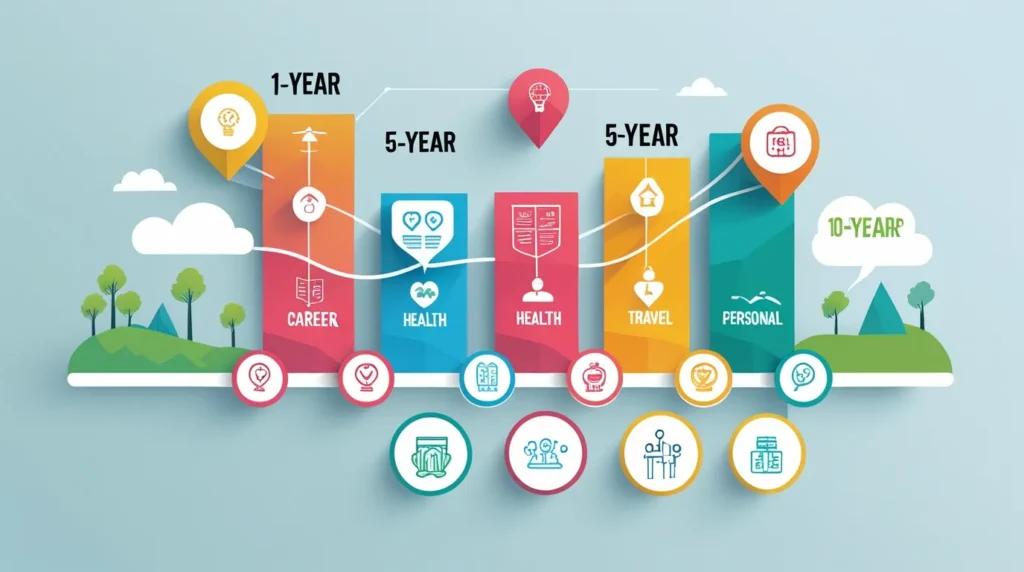
Time Horizons Setting 1-Year, 5-Year, and 10-Year Goals
Setting goals without a timeline is like planning a journey without a map. Time horizons — 1-year, 5-year, and 10-year goals — provide structure and clarity to your ambitions. Short-term goals create momentum, medium-term goals guide strategy, and long-term goals define your life vision. By aligning all three, you create a roadmap that bridges daily actions with your ultimate aspirations.
Understanding Time Horizon Goals
1-Year Goals (Short-Term)
- Purpose: Immediate focus, habit-building, and quick wins
- Examples:
- Complete a certification course
- Save ₹1,00,000 for an emergency fund
- Read 12 books in a year
- Start a daily exercise routine
- Tips: Make goals measurable, actionable, and realistic. Track progress monthly.
5-Year Goals (Medium-Term)
- Purpose: Strategic development, skill-building, and personal growth
- Examples:
- Achieve a promotion or leadership role
- Pay off student loans or mortgage
- Launch a small business
- Learn a new language fluently
- Tips: Break into yearly milestones. Adjust goals based on life changes.
10-Year Goals (Long-Term)
- Purpose: Visionary, life-defining achievements
- Examples:
- Achieve financial independence
- Own a home or dream property
- Travel extensively or live abroad
- Become an expert in your field
- Tips: Keep long-term goals broad yet inspiring. Visualize the outcome and align with your values.
Aligning Goals Across Horizons
- Start with the Long-Term Vision: Identify your ultimate 10-year objective.
- Define 5-Year Milestones: Determine skills, resources, and experiences needed to reach your long-term goal.
- Set 1-Year Action Plans: Create specific, measurable steps to progress toward medium-term goals.
- Review and Adapt: Reassess regularly to stay realistic and motivated.
Common Goal-Setting Tips
- Use SMART goals (Specific, Measurable, Achievable, Relevant, Time-bound)
- Balance personal, professional, financial, and health goals
- Keep a written roadmap or vision board
- Celebrate small wins to maintain momentum
- Remain flexible — goals evolve with life circumstances
Common Mistakes to Avoid
- Setting vague or unrealistic goals
- Ignoring short-term planning for long-term dreams
- Failing to track progress consistently
- Focusing solely on outcomes rather than actionable steps
- Letting setbacks derail momentum
Final Thoughts
Time horizon goal-setting creates clarity and structure for both daily actions and long-term ambitions. Short-term goals guide your present, medium-term goals shape your strategy, and long-term goals define your vision. By aligning these horizons, you ensure every action is purposeful and every achievement moves you closer to your ultimate life aspirations. Flexibility, consistency, and reflection are the keys to successfully navigating your personal and professional growth journey.