
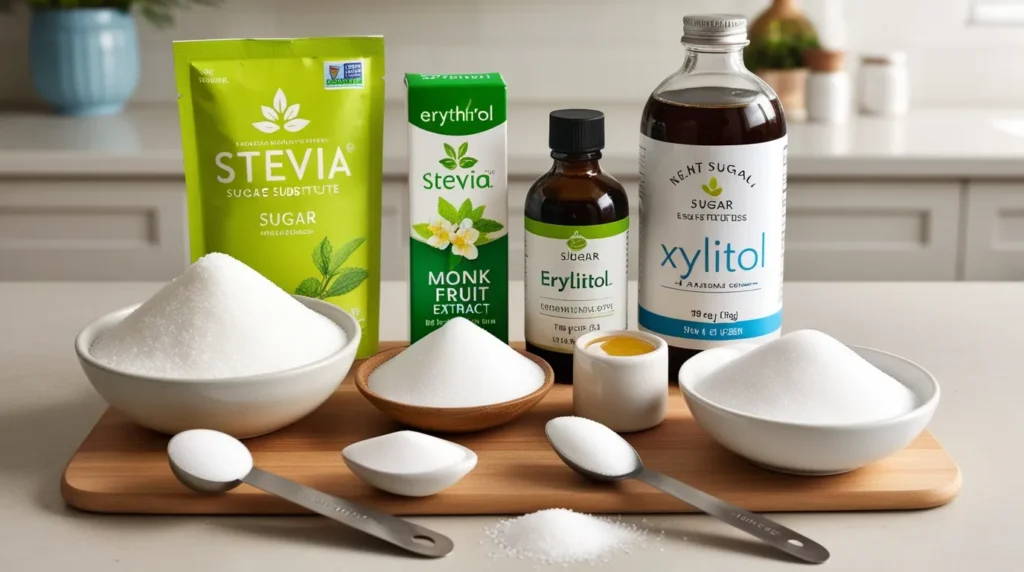
The Truth About Sugar Substitutes: What’s Safe and What’s No
With growing concerns over sugar’s link to obesity, diabetes, and other health issues, many people are turning to sugar substitutes to satisfy their sweet tooth. But not all sweeteners are created equal — some are safe and beneficial, while others may carry health risks.
Understanding the different types of sugar substitutes and their effects on your body is key to making informed choices.
🧪 1. What Are Sugar Substitutes?
Sugar substitutes are sweeteners used in place of sugar to provide sweetness with fewer calories or a lower glycemic impact. They fall into three main categories:
- Artificial Sweeteners: Chemically synthesized sweeteners such as aspartame, sucralose, and saccharin.
- Natural Non-Nutritive Sweeteners: Derived from plants and low in calories, like stevia or monk fruit.
- Sugar Alcohols: Naturally occurring compounds like xylitol, erythritol, and sorbitol, often used in “sugar-free” products.
💡 Tip: Each type affects your body differently — it’s important to know which is suitable for your health goals.
🌿 2. Safe and Popular Sugar Substitutes
1. Stevia
- Derived from the leaves of the Stevia plant.
- Calorie-free, does not raise blood sugar levels.
- Ideal for diabetics and low-calorie diets.
2. Monk Fruit Extract
- A natural, zero-calorie sweetener.
- Contains antioxidants and is safe for most people.
3. Erythritol
- A sugar alcohol with almost zero calories.
- Does not spike blood sugar and is gentle on the digestive system compared to other sugar alcohols.
4. Xylitol (in moderation)
- Sugar alcohol with dental benefits (prevents cavities).
- Excessive intake can cause digestive discomfort.
💬 Tip: Natural substitutes like stevia and monk fruit are generally considered safe for daily use.
⚠️ 3. Sugar Substitutes to Use With Caution
1. Aspartame
- Found in diet sodas, sugar-free gum, and some protein powders.
- Safe for most people, but should be avoided by individuals with phenylketonuria (PKU).
2. Saccharin
- One of the oldest artificial sweeteners.
- Linked to debates over cancer risk, though modern studies suggest it’s mostly safe in moderation.
3. Sucralose (Splenda)
- Heat-stable, popular for baking.
- Some studies suggest it may alter gut bacteria if consumed excessively.
4. Excessive Sugar Alcohols
- Sorbitol and maltitol in large amounts can cause bloating, diarrhea, and digestive issues.
💡 Tip: Artificial sweeteners are generally safe in moderation but avoid excessive consumption, especially if you have underlying health conditions.
🩺 4. Choosing the Right Sweetener for Your Lifestyle
Consider these factors before choosing a sugar substitute:
- Blood Sugar Control: Diabetics should stick to non-nutritive sweeteners like stevia or monk fruit.
- Weight Management: Calorie-free sweeteners reduce overall caloric intake.
- Digestive Health: Limit sugar alcohols if you have IBS or sensitive digestion.
- Cooking and Baking: Choose heat-stable sweeteners like sucralose or erythritol for baking.
💬 Tip: Combining natural sweeteners with small amounts of sugar can enhance flavor while reducing overall sugar intake.
⚖️ 5. The Bottom Line
Sugar substitutes can be a helpful tool in reducing sugar intake and managing health conditions, but moderation is key. Here’s a quick takeaway:
✅ Safe for most people: Stevia, monk fruit, erythritol, xylitol (moderation)
⚠️ Use with caution: Aspartame, sucralose, saccharin, large amounts of sugar alcohols
❌ Avoid excessive intake: Overconsumption of any artificial sweetener or sugar alcohol can cause side effects
💡 Remember: No substitute replaces a balanced diet and healthy eating habits. Focus on whole foods, natural sweetness from fruits, and mindful consumption.
Final Thoughts
Sugar substitutes can be a valuable ally in reducing sugar intake, managing blood sugar levels, and supporting a healthier lifestyle. However, not all sweeteners are created equal, and moderation is key. Natural options like stevia, monk fruit, and erythritol are generally safe for daily use, while artificial sweeteners and excessive sugar alcohols should be consumed with caution.
Ultimately, the best approach is a balanced diet that emphasizes whole foods, natural sweetness, and mindful consumption. By understanding the options and making informed choices, you can enjoy sweetness without compromising your health.