

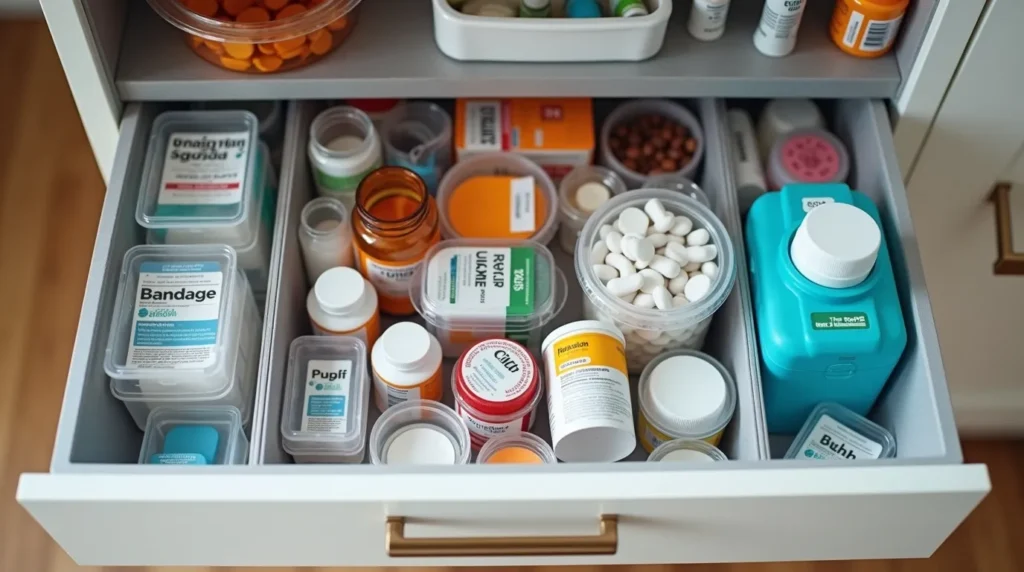
Organizing Your Medicine Cabinet and First-Aid Supplies
A well-organized medicine cabinet and first-aid kit is essential for safety, efficiency, and peace of mind. Whether it’s for everyday aches and pains, seasonal allergies, or unexpected emergencies, having your medications and supplies neatly arranged and easily accessible can save time — and even prevent mistakes.
🧴 1. Start With a Clean Slate
Before organizing:
- Empty the cabinet: Take out all medications, ointments, and first-aid supplies.
- Check expiration dates: Dispose of expired or unused medications safely.
- Clean the shelves or drawers: Use a damp cloth to remove dust or spills.
💡 Tip: Consider recycling packaging or using a medication disposal program at local pharmacies.
📦 2. Categorize Medications and Supplies
Grouping items by type makes your cabinet easier to navigate. Common categories include:
- Everyday Medications: Pain relievers, allergy medications, antacids.
- Prescription Medications: Keep these in a separate section or labeled box.
- Cold and Flu Remedies: Cough syrups, decongestants, throat lozenges.
- Topical Treatments: Creams, ointments, antiseptics.
- First-Aid Supplies: Bandages, gauze, antiseptic wipes, tweezers, scissors.
- Emergency Items: Thermometers, epinephrine auto-injectors, inhalers.
💬 Tip: Label shelves or containers clearly to make finding items quick and easy.
🧰 3. Choose Storage Solutions
Effective storage solutions keep items visible, safe, and organized:
- Clear bins or drawers: Great for small bottles and tubes.
- Tiered organizers: Make it easier to see items in the back of the cabinet.
- Stackable containers: Maximize vertical space.
- Dividers and trays: Keep bandages, ointments, and small supplies separated.
- Wall-mounted racks or caddies: Perfect for frequently used items.
💡 Tip: Keep childproofing in mind — use lockable cabinets or high shelves if you have young children.
⚖️ 4. Organize for Accessibility and Safety
- Place frequently used items in front: Makes grabbing daily medications easier.
- Separate adult and children’s medications: Avoid confusion.
- Store temperature-sensitive items appropriately: Follow label instructions (some may need refrigeration).
- Keep instructions and dosage information handy: Consider a small folder or notebook inside the cabinet.
💬 Tip: Rotate older medications to the front to ensure they are used before newer ones.
⏱️ 5. Maintain Your Medicine Cabinet Regularly
Organization is an ongoing task:
- Monthly Check: Remove expired or unused items.
- Update Inventory: Note when you need refills or replacements.
- Rearrange Seasonal Medications: Move allergy medications or flu remedies as needed.
💡 Tip: Maintaining your cabinet regularly prevents clutter and ensures you’re prepared during emergencies.
Final Thoughts
An organized medicine cabinet and first-aid kit is more than just tidy shelves — it’s a tool for safety, efficiency, and peace of mind. By categorizing items, using smart storage solutions, and maintaining your supplies regularly, you can ensure quick access to medications and emergency items whenever you need them.
Remember: a little time spent organizing today can save stress — and even prevent mistakes — tomorrow. 🏥✨