

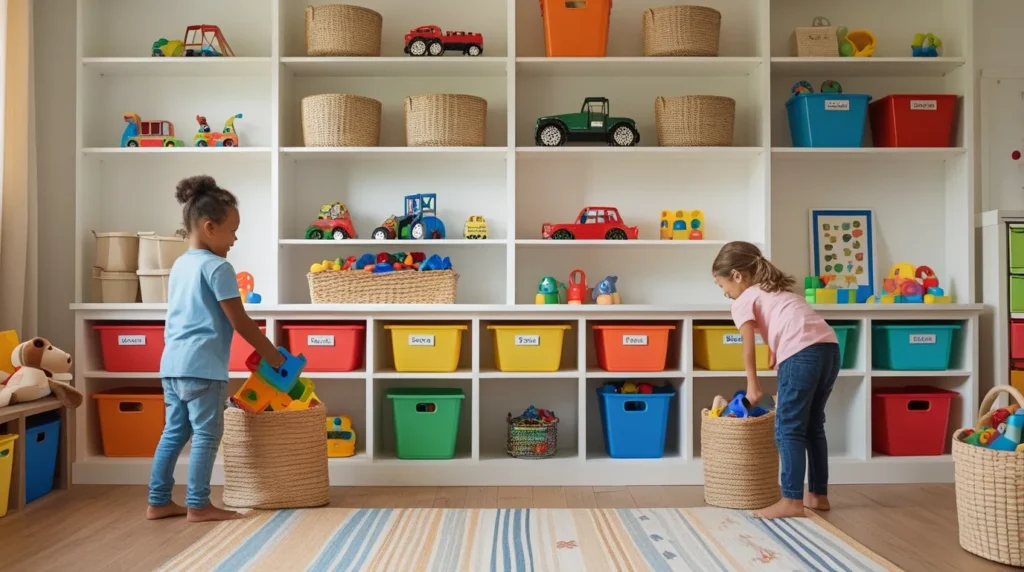
Organizing Kids’ Toys: Systems That Actually Work
Keeping kids’ toys organized can feel like an endless battle. Toys seem to multiply overnight, and even after tidying up, the mess often returns within hours. The key to success isn’t perfection — it’s creating simple, child-friendly systems that are easy to maintain.
When toy organization is practical and age-appropriate, children learn responsibility, cleanup becomes faster, and your home feels calmer and more functional. With the right systems in place, organizing kids’ toys can actually work long-term.
1. Sort and Declutter First
- Gather all toys in one place to see what you’re working with.
- Remove broken, unused, or outgrown toys.
- Donate or store toys that are no longer age-appropriate.
Why it works: Fewer toys mean less clutter and easier organization.
2. Categorize by Type
- Group toys into categories like blocks, dolls, cars, puzzles, art supplies, and games.
- Avoid mixing categories in one container.
- Keep frequently used toys more accessible.
Tip: Categories make it easier for kids to find and return toys.
3. Use Clear, Labeled Storage
- Transparent bins allow kids to see what’s inside.
- Add picture labels for younger children who can’t read yet.
- Use simple words and images for clarity.
Why it works: Visual cues reduce frustration and encourage independence.
4. Choose Kid-Height Storage Solutions
- Low shelves, cube organizers, and floor-level bins work best.
- Avoid high cabinets that require adult help.
- Let kids access and put away toys on their own.
Result: Children are more likely to clean up when they can reach everything easily.
5. Rotate Toys Regularly
- Store some toys out of sight and rotate them every few weeks.
- This keeps toys feeling new and exciting.
- Reduces daily mess and overwhelm.
Bonus: Fewer toys out at once means quicker cleanup.
6. Create Clear Cleanup Rules
- Set simple rules like “one toy out at a time.”
- Establish a daily cleanup routine before bedtime or meals.
- Make cleanup fun with music or a timer challenge.
Why it works: Consistency builds habits and accountability.
7. Use Multi-Purpose Storage
- Ottomans, benches, and under-bed bins save space.
- Use door-hanging organizers for small toys.
- Choose storage that blends with home décor.
Tip: Functional storage keeps toys organized without cluttering your space.
8. Involve Kids in the Process
- Let children help choose bins and labels.
- Teach them where each toy belongs.
- Praise effort, not perfection.
Why it matters: Ownership increases cooperation and long-term success.
Final Thoughts
Organizing kids’ toys doesn’t require complicated systems — it requires simplicity, accessibility, and consistency. 🏡✨
By decluttering, categorizing, using kid-friendly storage, and involving children in the process, you can create systems that truly work. The result is a cleaner home, easier routines, and kids who learn valuable organizational skills early on.
Remember: the goal isn’t a perfect playroom — it’s a functional space that supports play, learning, and peace of mind.