

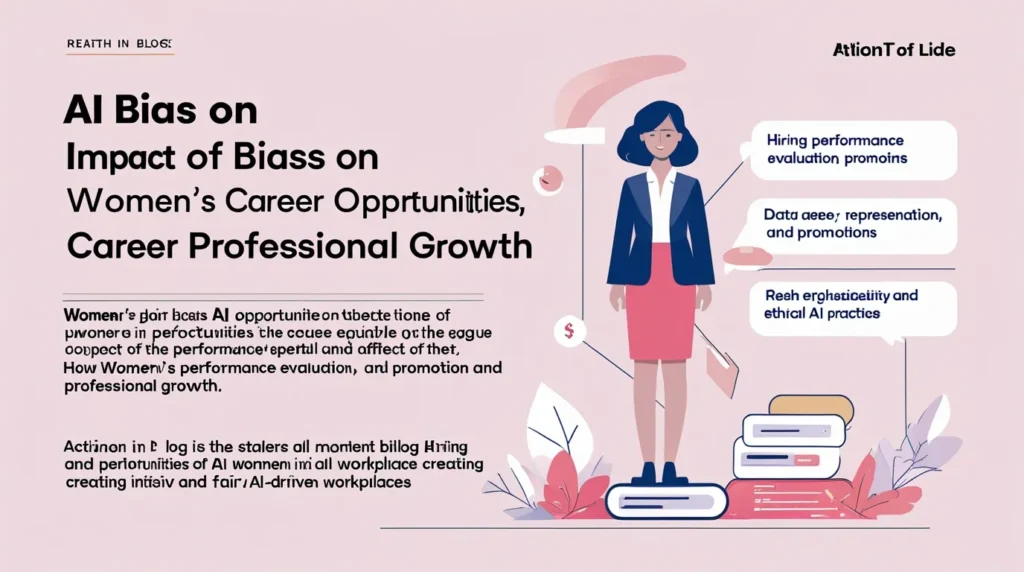
Impact of AI Bias on Women’s Opportunities and Careers
Artificial intelligence is rapidly reshaping the workplace, influencing hiring decisions, performance evaluations, promotions, and access to opportunities. While AI promises efficiency and objectivity, it can also reinforce existing inequalities. One of the most significant concerns today is AI bias and its impact on women’s careers, professional growth, and economic empowerment.
Understanding AI Bias
AI bias occurs when algorithms produce unfair outcomes due to biased data, flawed design, or unequal representation. Since AI systems learn from historical data, they often reflect existing social and workplace inequalities. When past data includes gender disparities, AI can unintentionally perpetuate them at scale.
Bias in AI is not always intentional, but its effects can be far-reaching and deeply embedded.
How AI Bias Affects Hiring and Recruitment
Many organizations rely on AI-powered tools to screen resumes and shortlist candidates. If training data favors male-dominated roles or language patterns, women may be systematically ranked lower or excluded. AI systems may associate leadership, technical skills, or seniority more strongly with men, limiting women’s access to high-growth roles.
This reduces diversity at the entry point, impacting long-term career trajectories.
Performance Evaluation and Promotion Bias
AI-driven performance management tools can also disadvantage women. Algorithms may undervalue collaborative leadership styles, career breaks, or flexible work patterns—factors more commonly associated with women due to caregiving responsibilities. As a result, women may receive lower performance scores or fewer promotion recommendations.
Such bias compounds over time, slowing career advancement and widening pay gaps.
Impact on Pay Equity and Job Mobility
When AI systems influence salary benchmarks or compensation decisions, biased data can reinforce wage inequality. Women may be offered lower salaries or fewer advancement opportunities, even when qualifications and performance match their male counterparts. AI-driven job matching systems may also limit exposure to higher-paying roles.
These patterns restrict economic mobility and long-term financial security.
Underrepresentation in AI Development
A key contributor to AI bias is the lack of diversity among those who design and train AI systems. When women are underrepresented in AI development and decision-making roles, critical perspectives may be overlooked. This leads to systems that fail to account for varied experiences and career paths.
Inclusive development is essential to creating fair AI tools.
Long-Term Career and Psychological Effects
Repeated exposure to biased systems can erode confidence, discourage ambition, and reduce retention. Women may feel unseen or undervalued, leading to disengagement or exit from certain industries altogether. Over time, this contributes to leadership gaps and reduced representation at senior levels.
Addressing AI Bias in the Workplace
Organizations must actively audit AI systems for bias, use diverse datasets, and include women in AI design and governance. Transparency, accountability, and human oversight are essential. Equally important is educating employees and leaders about the limitations of AI-driven decision-making.
Ethical AI is not just a technical challenge—it is a cultural and organizational responsibility.
Final Thoughts
AI has the power to transform workplaces, but without intentional design and oversight, it can reinforce the very inequalities it aims to eliminate. Addressing AI bias is crucial to ensuring women have equal access to opportunities, fair evaluations, and meaningful career growth. By prioritizing inclusivity, transparency, and diverse perspectives, organizations can harness AI as a tool for empowerment rather than exclusion.