
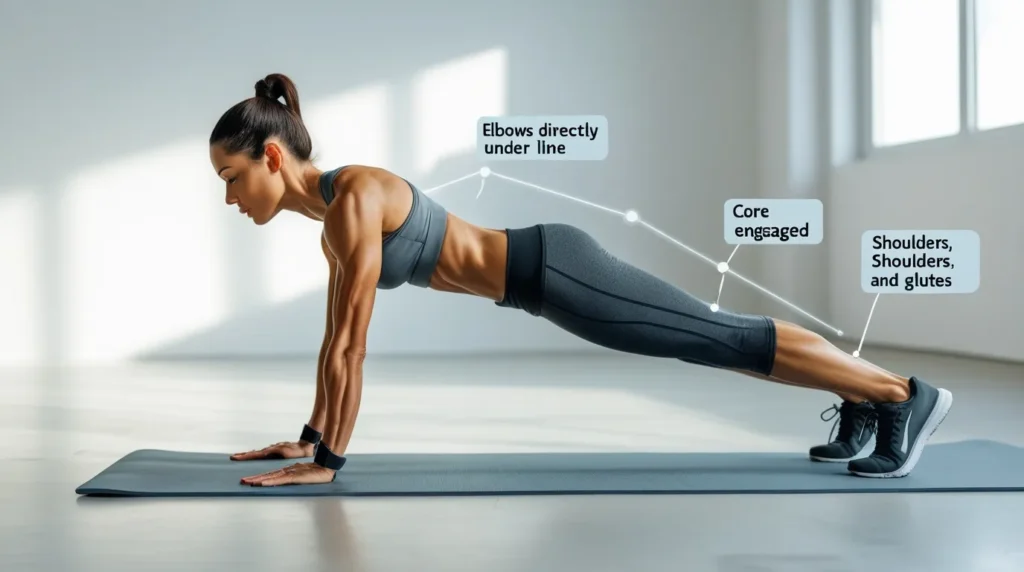
How to Master the Perfect Plank: Form and Variations
The plank may look simple, but it’s one of the most effective full-body exercises you can do. When performed correctly, planks strengthen the core, shoulders, back, glutes, and legs while improving posture and stability.
However, poor form can reduce benefits and increase the risk of injury. Mastering the perfect plank — and exploring its variations — helps you build strength safely and efficiently, whether you’re a beginner or an advanced fitness enthusiast.
1. Benefits of the Plank Exercise
- Strengthens the entire core, including deep stabilizing muscles.
- Improves posture and spinal alignment.
- Enhances balance and overall body control.
- Requires no equipment and can be done anywhere.
Why it works: Planks engage multiple muscle groups simultaneously.
2. Proper Plank Setup
- Start in a forearm position on the floor.
- Place elbows directly under shoulders.
- Extend legs straight back with toes tucked under.
- Keep your body in a straight line from head to heels.
Tip: Imagine balancing a glass of water on your back — it shouldn’t spill.
3. Key Form Tips for a Perfect Plank
- Engage your core by pulling your belly button toward your spine.
- Squeeze your glutes and tighten your thighs.
- Keep your neck neutral; look slightly ahead of your hands.
- Breathe steadily — don’t hold your breath.
Common Mistakes to Avoid:
- Sagging hips or arching the lower back.
- Raising hips too high.
- Shrugging shoulders toward the ears.
4. How Long Should You Hold a Plank?
- Beginners: 15–30 seconds.
- Intermediate: 30–60 seconds.
- Advanced: 60–120 seconds or longer with variations.
Tip: Quality matters more than duration.
5. Beginner-Friendly Plank Variations
- Knee Plank: Reduces strain while building strength.
- Incline Plank: Hands on a bench or wall for added support.
- Forearm Plank: A classic starting point for stability.
6. Intermediate Plank Variations
- High Plank: Performed on hands instead of forearms.
- Side Plank: Targets obliques and improves balance.
- Plank Shoulder Taps: Adds upper-body and core engagement.
7. Advanced Plank Variations
- Plank with Leg Lifts: Increases glute and core activation.
- Plank to Push-Up: Builds strength and coordination.
- Extended Plank: Arms stretched forward to increase difficulty.
8. Incorporating Planks into Your Workout
- Add planks to warm-ups or core circuits.
- Combine with dynamic movements for full-body workouts.
- Practice 3–5 times a week for best results.
Tip: Progress gradually to avoid overuse injuries.
Final Thoughts
Mastering the perfect plank is about proper form, consistency, and progression. 💪
By focusing on alignment and breathing and gradually introducing variations, planks can become a powerful tool for building strength, stability, and endurance. Remember, even short, well-executed planks can deliver impressive results when done correctly.