

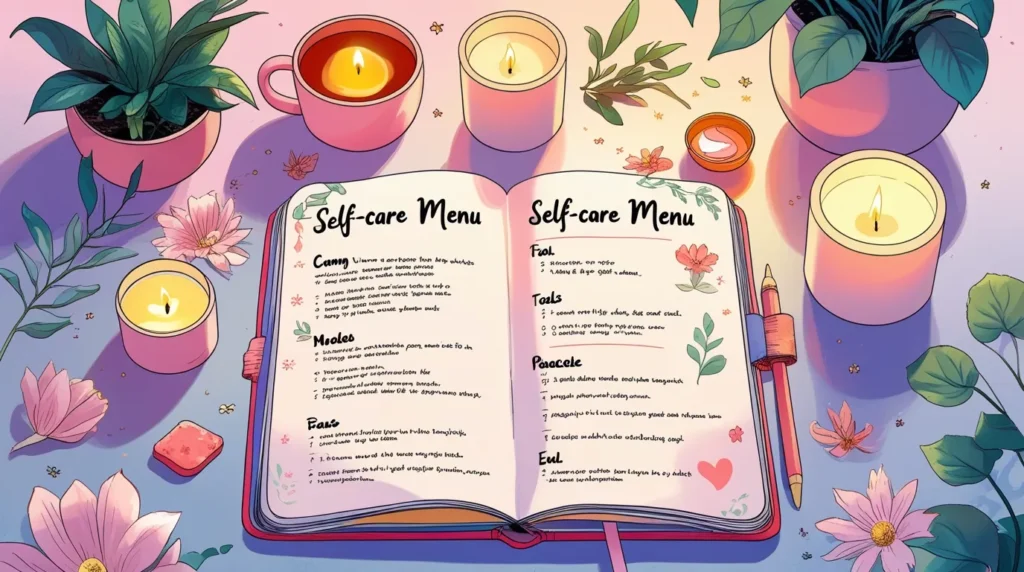
Creating a Self-Care ‘Menu’ for Different Moods and Needs
Self-care isn’t one-size-fits-all. What restores you on a stressful day may feel unnecessary on a calm one. A self-care menu is a personalized list of activities organized by mood, energy level, and emotional need—so you always know how to support yourself. Instead of asking, “What should I do?” you simply choose from your menu, just like ordering what you need most in the moment.
What Is a Self-Care Menu?
A self-care menu is a flexible, judgment-free collection of activities you can turn to based on how you feel. It removes decision fatigue, encourages consistency, and helps you respond intentionally to emotional and physical cues.
How to Build Your Self-Care Menu
Step 1: Identify Your Common Moods
- Stressed or overwhelmed
- Low energy or exhausted
- Anxious or restless
- Lonely or disconnected
- Unmotivated or stuck
- Calm and reflective
Step 2: Choose Activities That Feel Supportive
Pick options that are accessible, realistic, and comforting, not aspirational or overwhelming.
Step 3: Organize by Category
Think of your menu in sections—quick snacks, main dishes, and deep nourishment.
Self-Care Menu Ideas by Mood
When You’re Stressed or Overwhelmed
- Deep breathing or box breathing
- Writing a brain dump journal page
- Gentle stretching or yoga
- Taking a warm shower
- Listening to calming music
When You’re Low on Energy
- Short walk in natural light
- Drinking water or herbal tea
- 10-minute power nap
- Light stretching
- Simplifying tasks to one small win
When You’re Anxious or Restless
- Grounding exercises (5-4-3-2-1 method)
- Guided meditation
- Coloring or doodling
- Slow rhythmic movement
- Limiting screen time temporarily
When You Feel Lonely or Disconnected
- Calling or texting a trusted person
- Sitting in a café or public space
- Journaling about gratitude
- Engaging in an online support group
- Writing a letter to yourself
When You’re Unmotivated or Stuck
- Setting a 10-minute timer to start
- Changing your environment
- Reviewing personal goals
- Listening to an inspiring podcast
- Creating a simple to-do list
When You’re Calm and Grounded
- Reflection journaling
- Planning the week ahead
- Creative hobbies
- Reading for pleasure
- Practicing gratitude
Types of Self-Care to Include
- Physical: sleep, movement, nutrition
- Emotional: journaling, therapy, expression
- Mental: learning, boundaries, focus breaks
- Social: connection, communication
- Spiritual: meditation, nature, reflection
Tips for Maintaining Your Self-Care Menu
- Keep it visible—on your phone, journal, or wall
- Update it as your needs change
- Remove items that feel like chores
- Start small—consistency matters more than quantity
- Use it without guilt or pressure
Common Mistakes to Avoid
- Making the menu too long or complex
- Treating self-care as a reward instead of a need
- Ignoring physical basics like rest and hydration
- Comparing your self-care to others
- Expecting instant emotional shifts
Final Thoughts
A self-care menu empowers you to respond to your needs with compassion and intention. By preparing supportive options ahead of time, you eliminate guesswork during difficult moments and build a sustainable, personalized approach to well-being. Self-care becomes less about perfection and more about presence—meeting yourself where you are, one choice at a time.