

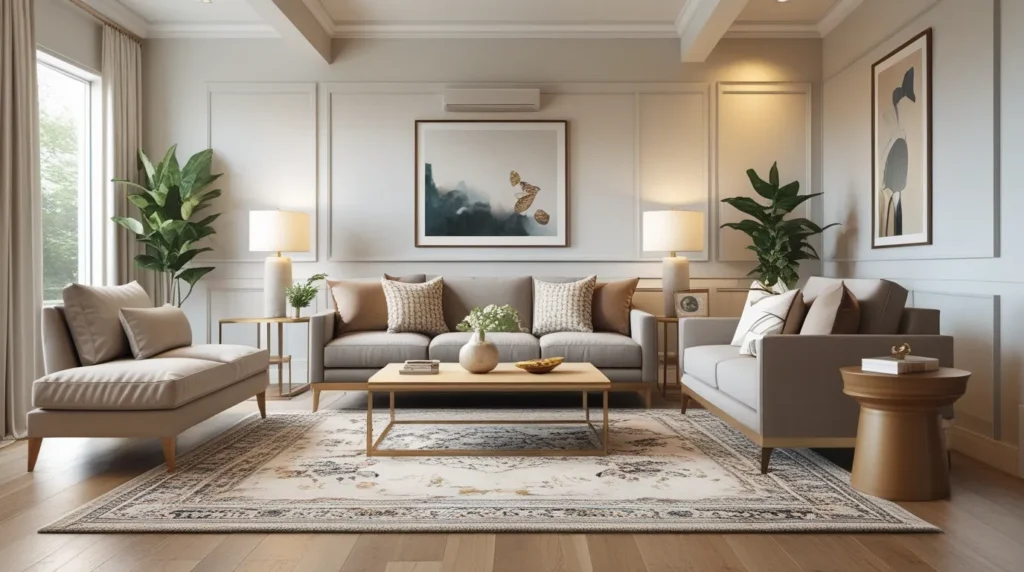
Choose the Perfect Area Rug Size and Placement
An area rug can completely transform a room — adding warmth, defining spaces, and tying your décor together. However, choosing the wrong rug size or placing it incorrectly can make even a beautifully furnished room feel unbalanced or cramped. Understanding how rug size and placement work for different rooms is essential for creating a cohesive and visually pleasing interior. This guide breaks down everything you need to know to choose the perfect area rug for any space in your home.
Why Area Rug Size and Placement Matter
- Helps define functional zones in open-plan layouts
- Creates visual balance and harmony
- Makes rooms feel larger, cozier, or more structured
- Protects flooring and reduces noise
- Anchors furniture and enhances décor style
Living Room Rug Size and Placement
Ideal Rug Sizes:
- Small living rooms: 5×8 ft
- Medium living rooms: 8×10 ft
- Large living rooms: 9×12 ft or larger
Best Placement Options:
- All legs on: All furniture legs sit on the rug for a luxurious, unified look
- Front legs on: Sofa and chairs’ front legs rest on the rug for balance
- Floating rug: Rug sits under the coffee table only (best for small spaces)
Extra Tips:
- Leave 8–12 inches of floor visible around the rug edges
- Align the rug with the sofa, not the walls
- Rectangular rugs work best in most living rooms
Bedroom Rug Size and Placement
Ideal Rug Sizes:
- Twin bed: 5×8 ft
- Queen bed: 8×10 ft
- King bed: 9×12 ft
Best Placement Options:
- Rug placed under the lower two-thirds of the bed
- Large rug fully under the bed with visible borders on all sides
- Two runners placed on each side of the bed for smaller rooms
Extra Tips:
- Ensure the rug extends at least 18–24 inches beyond the bed sides
- Soft, plush textures work best for comfort
- Neutral tones create a calming bedroom atmosphere
Dining Room Rug Size and Placement
Ideal Rug Sizes:
- Rug should be at least 24 inches larger than the table on all sides
Best Placement Rules:
- Chairs must stay fully on the rug, even when pulled out
- Choose low-pile rugs for easy cleaning
- Rectangular rugs for rectangular tables, round rugs for round tables
Extra Tips:
- Avoid thick shag rugs in dining areas
- Patterned rugs help hide stains
- Center the rug perfectly under the table
Area Rugs for Open-Concept Spaces
How Rugs Define Zones:
- Use rugs to separate living, dining, and workspace areas
- Keep consistent color palettes for visual flow
- Different textures help define each functional space
Extra Tips:
- Avoid rugs that are too small — bigger is usually better
- Leave walking pathways clear
- Match rug shapes to furniture layouts
Choosing the Right Rug Shape
- Rectangular: Most versatile and common
- Round: Softens sharp corners, great for small spaces
- Square: Works well in symmetrical rooms
- Runner: Ideal for hallways, kitchens, and bedside placement
Common Area Rug Mistakes to Avoid
- Choosing a rug that’s too small
- Pushing rugs against walls
- Ignoring furniture proportions
- Using high-pile rugs in high-traffic areas
- Overlapping multiple rugs incorrectly
Final Thoughts
Choosing the perfect area rug size and placement is all about proportion, balance, and purpose. The right rug enhances comfort, visually anchors furniture, and elevates your overall interior design. By understanding room dimensions, furniture layouts, and functional needs, you can confidently select a rug that transforms your space into a cohesive and stylish environment. When in doubt, always size up — a larger rug almost always looks better than one that’s too small.