

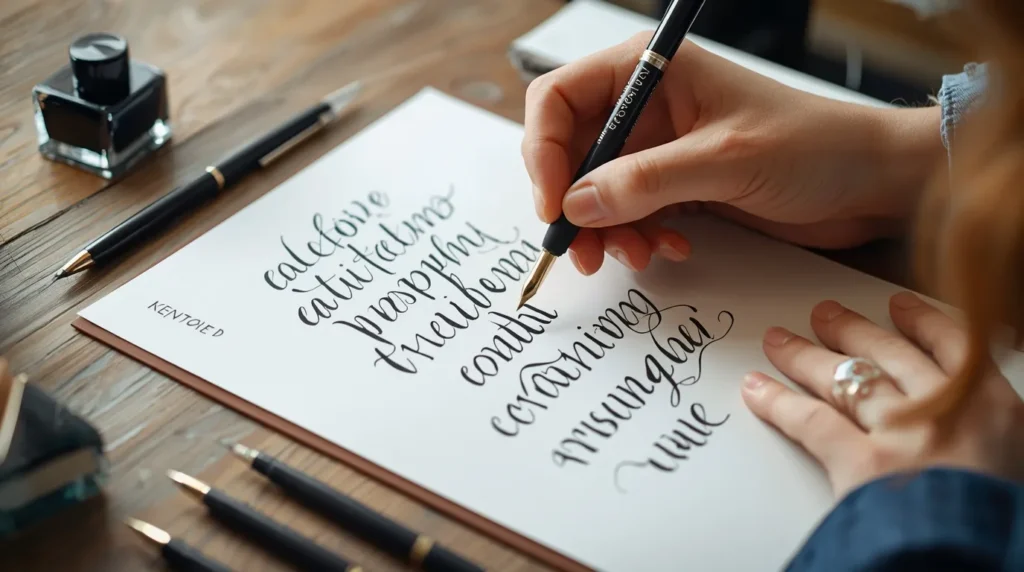
Beginner’s Guide to Calligraphy and Hand Lettering
Calligraphy and hand lettering are beautiful art forms that turn simple writing into expressive design. While both involve stylized letters, they differ in technique—calligraphy focuses on structured strokes using specific tools, while hand lettering is the art of drawing letters creatively. Whether you want to design invitations, journals, or social media posts, learning these skills can be both relaxing and rewarding.
The best part? You don’t need to be an artist to start—just patience, practice, and a willingness to experiment.
Calligraphy vs. Hand Lettering
- Calligraphy: Writing letters with consistent strokes using tools like brush pens or dip pens
- Hand Lettering: Drawing letters with creative freedom, styles, and embellishments
Both styles can complement each other beautifully.
Essential Tools for Beginners
For Calligraphy
- Brush pens (small and large tips)
- Dip pen and ink (optional for advanced beginners)
- Smooth practice paper
For Hand Lettering
- Pencils and erasers
- Fine liners or markers
- Sketchbooks
Start simple—basic tools are enough to begin.
Basic Calligraphy Strokes
Mastering strokes is the foundation of calligraphy:
- Upstrokes → light pressure
- Downstrokes → heavy pressure
- Entry and exit strokes
- Loops and curves
Practice these repeatedly before forming letters.
Fundamental Lettering Techniques
1. Practice the Alphabet
- Start with lowercase letters
- Focus on consistency in size and spacing
2. Use Guidelines
- Draw light lines to maintain alignment
- Helps improve uniformity
3. Build Muscle Memory
- Repeat strokes daily
- Slow practice improves control
Popular Styles to Explore
- Modern calligraphy
- Faux calligraphy (using regular pens)
- Serif and sans-serif lettering
- Bounce lettering (playful style)
- Brush lettering
Experimenting helps you find your personal style.
Easy Beginner Exercises
- Trace lettering worksheets
- Write simple words daily
- Practice strokes for 10 minutes
- Create short quotes or phrases
- Copy styles you admire (for learning only)
Consistency matters more than complexity.
Common Mistakes to Avoid
- Pressing too hard on upstrokes
- Skipping basic stroke practice
- Comparing your work to professionals
- Rushing through letters
- Using low-quality paper that bleeds ink
Patience is key to improvement.
Tips to Improve Faster
- Practice a little every day
- Study letter shapes carefully
- Slow down your strokes
- Focus on spacing and balance
- Keep your hand relaxed
Improvement comes with repetition and awareness.
Creative Ways to Use Your Skills
- Designing greeting cards
- Journaling and planners
- Social media quotes
- Wedding or event invitations
- Wall art and décor
These skills can even turn into a side business.
Final Thoughts
Calligraphy and hand lettering are more than just writing—they’re creative expressions that combine art, patience, and mindfulness. As a beginner, focus on enjoying the process rather than chasing perfection. With consistent practice and experimentation, your style will naturally evolve, and what starts as a hobby can become a deeply satisfying creative outlet.