

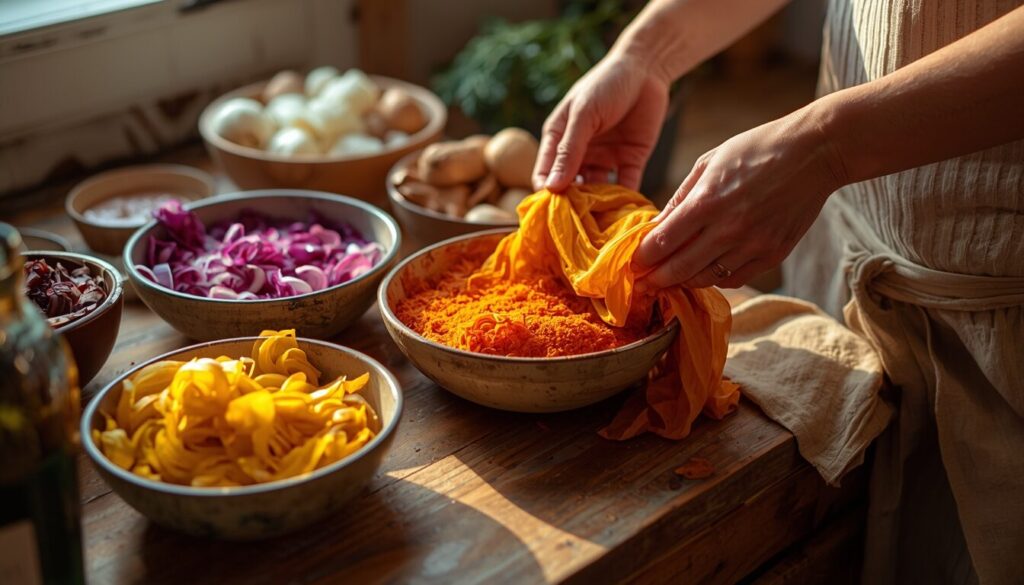
How to Make Your Own Natural Dyes from Food Scraps
Did you know that the peels, skins, and leftover bits from your kitchen can be transformed into vibrant, natural dyes? Making your own dyes from food scraps is not only eco-friendly but also a fun and creative way to bring color to fabrics, papers, or crafts. With a little patience and experimentation, you can turn what would normally be waste into beautiful hues.
Why Choose Natural Dyes?
- Sustainable & Eco-Friendly: Reduces reliance on chemical dyes that pollute water sources.
- Cost-Effective: Uses scraps that would otherwise be discarded.
- Creative & Unique: Produces colors that are organic and often unpredictable—making every project one-of-a-kind.
- Non-Toxic: Safer for your skin, kids, and pets.
Common Food Scraps You Can Use
- Onion Skins: Golden to deep orange shades
- Red Cabbage Leaves: Purple, blue, or green depending on pH
- Beetroot Peels: Vibrant pinks and reds
- Spinach Stems & Leaves: Soft greens
- Avocado Pits & Skins: Soft peach to pinkish hues
- Turmeric Roots or Skins: Bright yellow
Step-by-Step Guide to Making Natural Dyes
1. Collect and Prepare Scraps
Gather your chosen food scraps and rinse them to remove dirt. Chop into small pieces to maximize color extraction.
2. Boil the Scraps
Place the scraps in a pot, cover with water, and simmer for 30–60 minutes. The longer you simmer, the more intense the color.
3. Strain the Liquid
Remove the solid scraps using a strainer or cheesecloth. The remaining liquid is your dye.
4. Prepare the Fabric or Material
Natural fabrics like cotton, silk, or wool work best. Pre-soak in a mordant solution (vinegar or salt water) to help the dye bind.
5. Dye Your Material
Submerge the fabric or paper into the dye. Simmer gently for 30–60 minutes, or let it sit overnight for deeper tones.
6. Rinse and Dry
Remove the dyed material, rinse gently with cool water, and air-dry away from direct sunlight to prevent fading.
Tips for Better Results
- Experiment with pH changes: Adding vinegar or baking soda can alter the color.
- Layer dyes to create unique shades and gradients.
- Keep a color journal to note which scraps produce which colors.
- Use gloves to avoid staining your hands.
Fun Projects with Natural Dyes
- Dyeing t-shirts, scarves, or socks
- Coloring paper, cards, or journals
- Creating homemade Easter eggs
- DIY wall hangings or textiles
Natural dyes open endless creative possibilities and make crafting eco-conscious and colorful.
Final Thoughts
Making your own natural dyes from food scraps is a fun, sustainable, and artistic way to repurpose kitchen waste. With simple steps, patience, and creativity, you can transform everyday scraps into stunning colors for fabric, paper, and craft projects. Not only does this reduce waste, but it also connects you to the natural world in a hands-on, joyful way.