
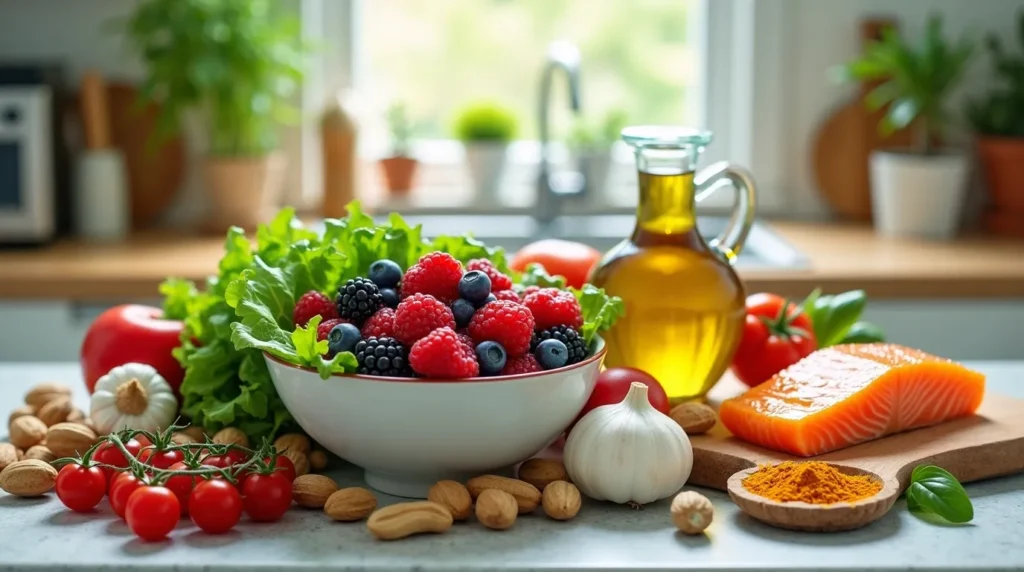
Top 10 Anti-Inflammatory Foods to Add to Your Diet
Chronic inflammation can contribute to health issues such as heart disease, arthritis, diabetes, and autoimmune conditions. The good news? Your diet can play a powerful role in reducing inflammation naturally.
Incorporating anti-inflammatory foods into your meals not only promotes overall wellness but also supports your immune system, boosts energy, and aids in disease prevention. Here’s a list of ten nutrient-rich foods to help fight inflammation while keeping your meals delicious.
1. Fatty Fish
- Salmon, mackerel, sardines, and trout are rich in omega-3 fatty acids.
- Omega-3s help reduce inflammation in blood vessels and joints.
- Aim for 2–3 servings per week.
Tip: Grilled, baked, or steamed is healthier than fried.
2. Leafy Greens
- Spinach, kale, Swiss chard, and collard greens contain antioxidants and polyphenols.
- Help protect cells from inflammation and oxidative stress.
- Include them in salads, smoothies, or sautés.
3. Berries
- Blueberries, strawberries, raspberries, and blackberries are rich in flavonoids.
- Flavonoids reduce inflammatory markers and support heart health.
- Perfect for snacks, smoothies, or oatmeal toppings.
4. Nuts
- Almonds, walnuts, and pistachios provide healthy fats, fiber, and vitamin E.
- Reduce inflammation and support cardiovascular health.
- A small handful daily is sufficient.
5. Olive Oil
- Extra virgin olive oil contains oleocanthal, which has anti-inflammatory properties.
- Use as a salad dressing or for light sautéing.
- Substitute for butter or other cooking oils for added benefits.
6. Tomatoes
- Rich in lycopene, a powerful antioxidant that combats inflammation.
- Best consumed cooked for higher lycopene absorption.
- Include in sauces, soups, or roasted dishes.
7. Turmeric
- Contains curcumin, a natural anti-inflammatory compound.
- Pair with black pepper to enhance absorption.
- Add to curries, soups, or golden milk for flavor and benefits.
8. Garlic
- Garlic has sulfur compounds that reduce inflammation and support immunity.
- Use fresh garlic in cooking or raw in dressings.
- Incorporate it into pasta, roasted vegetables, or sauces.
9. Green Tea
- Rich in polyphenols called catechins, which help combat inflammation.
- Drink 2–3 cups daily for maximum benefits.
- Can also be enjoyed iced or in matcha form.
10. Whole Grains
- Oats, quinoa, barley, and brown rice contain fiber and antioxidants.
- Reduce inflammatory markers like CRP (C-reactive protein).
- Swap refined grains for whole grains in meals.
Final Thoughts
Incorporating these anti-inflammatory foods into your diet can help you reduce chronic inflammation, support heart health, and enhance overall well-being. 🥬✨
Focus on variety and consistency — combine fruits, vegetables, healthy fats, and whole grains for maximum benefits. Small dietary changes can create lasting positive effects on your health.