

Beginner’s Guide to Contour and Highlight for Every Face Shape
Makeup is all about enhancing your natural features, and contouring and highlighting are essential techniques for adding dimension and glow to your face. While it may seem intimidating at first, understanding your face shape and applying products strategically can instantly elevate your look.
Whether you’re new to makeup or just looking to refine your technique, this guide will walk you through contour and highlight tips for every face shape.
🌟 1. Understanding Contour and Highlight
- Contour: Darker shades used to create shadows and define areas of your face, making features like your cheekbones or jawline appear more sculpted.
- Highlight: Lighter shades applied to bring forward areas of your face you want to accentuate, adding brightness and glow.
💡 Tip: Use products 1–2 shades darker or lighter than your skin tone for a natural effect.
🪞 2. Identify Your Face Shape
Knowing your face shape is key to contouring effectively. Common face shapes include:
- Oval – Balanced proportions, slightly narrower jawline.
- Round – Full cheeks, softer jawline.
- Square – Strong jawline and broad forehead.
- Heart – Wider forehead, narrower chin.
- Long/Rectangular – Longer face with less width.
💬 Tip: Stand in front of a mirror, pull your hair back, and trace the outline of your face with a lip liner or finger to determine your shape.
✨ 3. Contouring and Highlighting Techniques by Face Shape
Oval Face
- Contour: Lightly under cheekbones to enhance natural structure.
- Highlight: Center of forehead, bridge of nose, top of cheekbones, and chin.
Round Face
- Contour: Sides of the forehead and jawline to create length.
- Highlight: Center of the face — forehead, nose, and chin — to draw the eye inward.
Square Face
- Contour: Along the jawline and temples to soften angles.
- Highlight: Center of the forehead, under eyes, and chin to balance strong features.
Heart Face
- Contour: Sides of forehead and temples to reduce width.
- Highlight: Cheekbones, under eyes, and chin to balance the narrower lower face.
Long/Rectangular Face
- Contour: Top of forehead and bottom of chin to shorten appearance.
- Highlight: Center of forehead, under eyes, and top of cheeks to add width.
💡 Tip: Always blend well to avoid harsh lines — use a damp makeup sponge or brush in circular motions for seamless results.
🖌️ 4. Product Tips for Beginners
- Cream Contours: Easy to blend, ideal for beginners.
- Powder Contours: Great for setting makeup and adding definition.
- Highlighter Shades: Champagne or soft gold tones suit most skin tones.
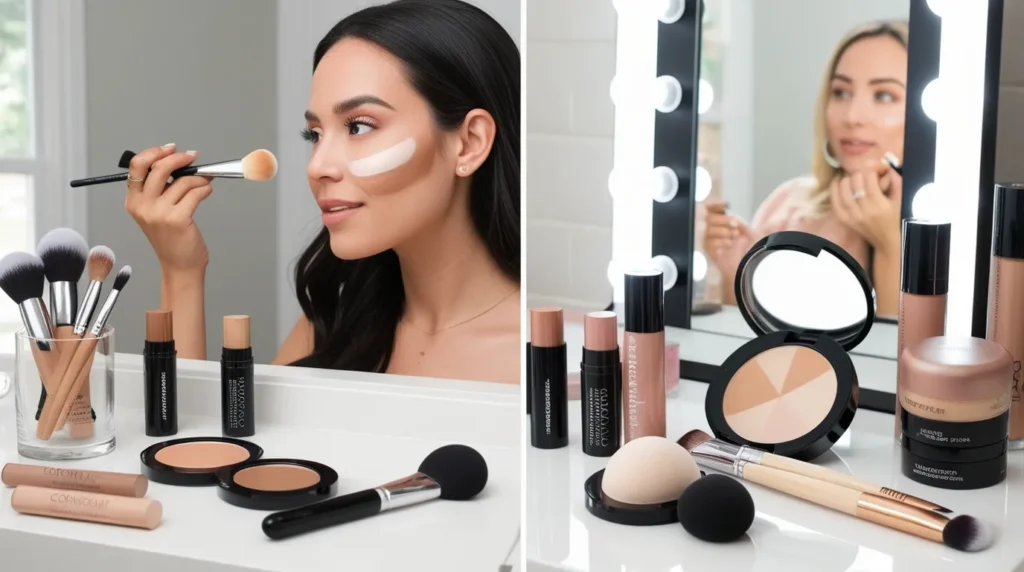
- Tools: Blending brushes, beauty sponges, and angled contour brushes give professional results.
💬 Tip: Start subtle — you can always build intensity gradually.
🌈 5. Quick Application Hacks
- Apply contour first, then blend upward for a natural shadow effect.
- Apply highlight after foundation to make your features pop.
- Use neutral lighting when blending to ensure even application.
- Set cream contour with translucent powder to avoid smudging.
💡 Fun Tip: A little highlight on the inner corners of your eyes and Cupid’s bow instantly brightens your face.
🌟 6. Practice Makes Perfect
Like any makeup skill, contouring and highlighting improve with practice. Start with everyday subtle looks before experimenting with dramatic contour for evening or photo-ready makeup. Over time, you’ll learn what shapes, shades, and placement enhance your unique features best.
Final Thoughts
Contour and highlight aren’t about changing your face — they’re about enhancing your natural beauty. By understanding your face shape, choosing the right shades, and practicing blending techniques, you can add dimension, glow, and definition effortlessly.
Remember, makeup is creative and personal — embrace your features and have fun experimenting! 💄✨