

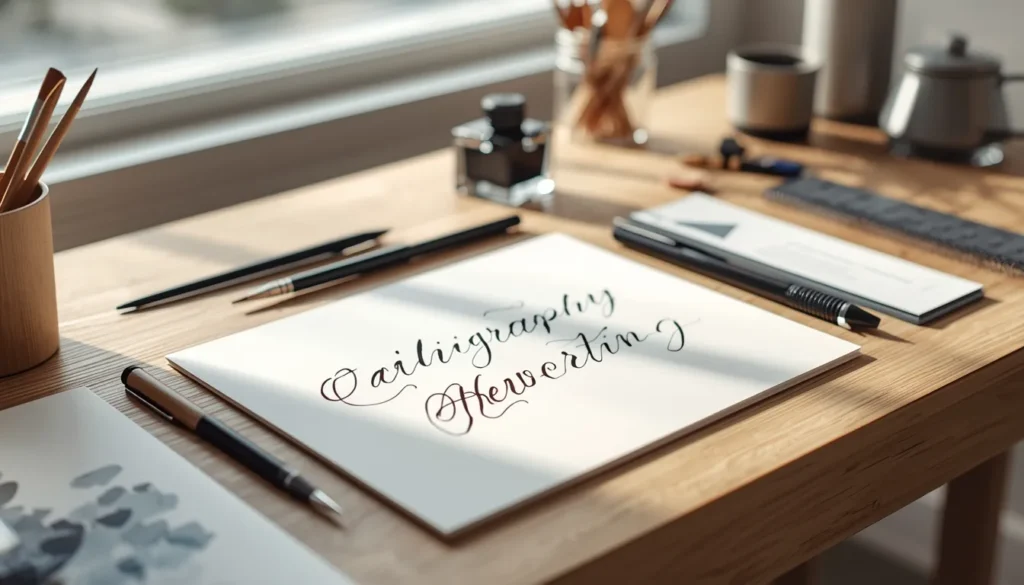
Beginner’s Guide to Calligraphy and Hand Lettering
In a fast-paced digital world, the art of beautiful writing feels refreshingly personal. Calligraphy and hand lettering allow you to slow down, focus, and create something uniquely yours. Whether you want to design greeting cards, journal creatively, or explore a relaxing hobby, learning the basics is easier than you think.
This beginner-friendly guide will help you understand the difference between calligraphy and hand lettering, the tools you need, and how to start practicing today.
Understanding the Difference
Although often used interchangeably, calligraphy and hand lettering are not exactly the same.
✒ Calligraphy
Calligraphy is the art of decorative writing using specific tools and controlled strokes. It focuses on fluid movement and stroke contrast — thin upstrokes and thick downstrokes.
It follows structured letterforms and rhythm.
✏ Hand Lettering
Hand lettering is the art of drawing letters. Instead of writing in one continuous motion, you design and illustrate each letter individually.
It is more flexible and creative, often used for quotes, posters, and social media graphics.
Think of it this way:
Calligraphy = Writing beautifully.
Hand Lettering = Designing letters artistically.
Tools You’ll Need
You don’t need expensive supplies to begin.
For Calligraphy:
- Brush pen (best for beginners)
- Smooth practice paper
- Printable practice sheets
- Pencil and eraser (for guidelines)
For Hand Lettering:
- Fineliner or gel pens
- Markers
- Sketchbook
- Ruler for alignment
Start simple and upgrade as your skills grow.
Master the Basic Strokes First
Before writing full letters, practice the foundation strokes:
- Thin upstroke (light pressure)
- Thick downstroke (heavy pressure)
- Ovals
- Loops
- Entrance and exit strokes
Muscle memory is key. Practicing strokes builds control and consistency.
Learn Pressure Control
In brush calligraphy:
- Apply light pressure when moving upward
- Apply firm pressure when moving downward
This contrast creates the elegant look that defines calligraphy.
It may feel unnatural at first, but with repetition, your hand will adapt.
Build Letters Step by Step
Break letters into shapes instead of writing them quickly.
For example:
- The letter “a” combines an oval and a downstroke
- The letter “n” uses arches and controlled pressure
Master lowercase letters first before moving to uppercase or flourishes.
Practice Smart, Not Just Hard
- Practice 15–20 minutes daily
- Trace worksheets before freehand writing
- Write short, simple words
- Focus on consistency rather than speed
- Review your work to track progress
Small daily practice sessions are more effective than occasional long sessions.
Common Beginner Mistakes
- Using rough paper that damages brush tips
- Pressing too hard on upstrokes
- Skipping basic stroke practice
- Comparing your work to advanced artists
Remember, every expert started with shaky lines.
Creative Ways to Use Your Skills
Once confident, you can use calligraphy and hand lettering for:
- Wedding invitations
- Greeting cards
- Journaling
- Personalized gifts
- Wall art
- Social media quotes
- Business branding elements
It’s a hobby that can also become a side business if nurtured.
The Therapeutic Side of Lettering
Many people fall in love with calligraphy because it’s calming. The repetitive strokes improve focus and reduce stress. It encourages mindfulness and allows you to disconnect from screens.
It’s not just writing — it’s a form of creative meditation.
Final Thoughts
Starting calligraphy and hand lettering may feel challenging at first, but progress comes with patience and consistency. Focus on mastering the basics, practice regularly, and allow yourself room to improve.
Beautiful writing isn’t about perfection — it’s about expression.
With time and dedication, your simple strokes will turn into elegant works of art.